Is nastergal poisonous? The honest short answer is no — not the ripe berries, and not in the way the word suggests. Fully ripe nastergal, the deep purple-black ones, are edible and have been eaten across Southern Africa for generations. The only part to leave off your plate is the unripe green berry — and even that, eaten raw, will at worst give you a mild stomach upset rather than anything dangerous. The leaves, in fact, are cooked and eaten like spinach across Africa. And despite the alarming “nightshade” label it sometimes carries, nastergal is not the same plant as “deadly nightshade.” Below is exactly what’s safe, what isn’t, and why you can enjoy a jar of nastergal konfyt with complete confidence.
The one rule that matters: ripe and dark, never green
If you remember nothing else, remember this: ripe and dark is the eating stage; green is not.
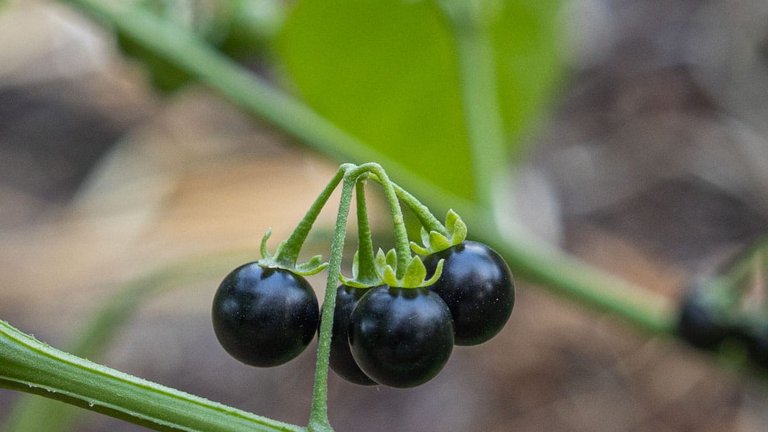
A nastergal berry starts out small, hard and green. As it ripens it swells, softens and deepens to a rich, almost-black purple. The fully ripe, dark berry is the part people have always eaten and preserved. The green, unripe berry is the one to avoid — and this single rule is the whole answer to the safety question.
It is exactly why nastergal is always harvested fully ripe, and why we cook only the dark, soft, ready berries into our konfyt. Nothing green ever goes in the pot.
Green berries and leaves: not poison, just not for eating raw
Let’s be precise about the caution, because “poisonous” is far too strong a word for it.
Like many plants in the nightshade family — including the green parts of everyday potatoes and tomatoes — the unripe green berries and the raw leaves of nastergal contain a natural compound called solanine. Solanine is bitter, and eaten raw in quantity it can cause a mild stomach upset or a touch of nausea — no more than that. It isn’t something mysterious or sinister; it’s simply the plant’s own defence while the fruit is still developing.
In fact, the leaves are not something to fear at all. Across Africa they are cooked like spinach into a traditional leafy dish — gentle cooking breaks the solanine down — and this is exactly where the isiZulu name umsobo comes from: it names both the berry and the greens made from the plant. Raw and unripe, the green berries are simply best left off your plate; ripe and dark, they’re the ones we pick.
As the berry ripens and turns from green through to deep purple-black, that solanine drops to very low levels and the fruit becomes both palatable and safe to eat. In other words, ripeness is the safety mechanism. The plant tells you when it’s ready by changing colour.
Nastergal is not “deadly nightshade”
This is where most of the fear comes from, so let’s deal with it head-on. People sometimes confuse nastergal with Atropa belladonna, the genuinely dangerous plant known as deadly nightshade. They are two completely different plants:
- Deadly nightshade (Atropa belladonna): carries large, shiny, single berries and purple, bell-shaped flowers, contains powerful toxins, and has never been a food plant. It is native to Europe, North Africa and Western Asia and does not occur naturally in South Africa — so it isn’t something you’ll ever stumble on in the veld here.
- Nastergal (Solanum nigrum / Solanum retroflexum): carries small, matte berries in little clusters and white, star-shaped flowers, and is a long-eaten African food known in isiZulu as umsobo or msobo and in English as sunberry or black nightshade.
They share the word “nightshade” the way a house cat shares a family with a lion — related in name, worlds apart in practice. We make our konfyt from nastergal, never belladonna. If you’d like the full picture of the berry itself, our guide to what a nastergal is covers its names, taste and history in depth.
How to know a nastergal berry is ready to eat
A ripe nastergal berry is:
- Deep purple-black in colour — not green, not part-green.
- Soft to the touch, giving slightly when gently pressed.
- Easily picked, coming away from the cluster without a fight.
When it’s ripe, the taste is a pleasant surprise: mildly sweet, gently earthy, with a soft tomato-like tang. A green, firm berry is simply not ready and should be left on the plant.
One honest word of caution: correctly identifying a wild plant and judging true ripeness takes real knowledge, and look-alike plants do exist. We would never encourage casual roadside foraging. The reassuring part is that you don’t have to — which is rather the point of the section below.
Is nastergal safe for children and pets?
For children, ripe nastergal and the konfyt made from it are an ordinary food, enjoyed on scones and cheese boards like any other preserve. The same common-sense rule applies as with any wild plant: keep little ones from picking and eating unknown green berries in the veld.
For pets and livestock, there’s no need to panic if an animal nibbles a wild plant — at worst the raw green berries might give it a mild stomach upset, the same as they would a person. It’s simply not something to let pets graze on freely. The finished konfyt is a human food and, like any sugary jam, isn’t something to feed to pets regardless.
Why our konfyt is safe to enjoy
Here’s the part that settles it. Every berry in a jar of our konfyt has been identified, hand-selected at full ripeness, and cooked by people who have harvested this fruit for years at Bloukop Farm near Amersfoort, in the Mpumalanga Highveld. There is no green fruit, no guesswork, and no foraging risk passed on to you.
So — is nastergal poisonous? Not really, and certainly not the ripe berry prepared the way it always has been. The only caution is narrow and mild: raw, unripe green berries are best left alone. The ripe dark berries in your konfyt — and the cooked leaves on an African dinner table — have nourished people here for generations.
If you’d like to taste it for yourself, you can order genuine Bloukop nastergal konfyt direct from us, or browse the full range on our products page. From our Highveld farm to your table — safely, and the way it’s always been done.
Taste the berry behind the story
Whole nastergal berries, hand-harvested and preserved in a deep purple syrup on Bloukop Farm. Order direct and have a jar sent to you.
Order Nastergal Konfyt